

Common Water Tank Problems and How Professional Cleaning Helps Prevent Them
Common Water Tank 20 July 26
A clean water tank is essential for storing safe water for drinking, cooking, bathing, and other daily household or commercial needs. However, like any water storage system, tanks can develop problems over time if they are not properly maintained.
Dubai's climate presents additional challenges. High temperatures, dust storms, humidity, and continuous water storage can accelerate the buildup of sediment, bacteria, algae, and other contaminants inside water tanks. Many of these issues develop gradually and often go unnoticed until they begin affecting water quality or the plumbing system.
In this guide, we'll explore the most common water tank problems, explain what causes them, and show how regular professional water tank cleaning can help prevent costly repairs while maintaining cleaner and safer water.
Why Water Tank Problems Are Common in Dubai
Water tanks in Dubai operate under conditions that naturally increase the risk of contamination and wear over time.
Some of the most common contributing factors include:
- Fine desert dust entering through poorly sealed tank openings
- High temperatures that encourage bacterial and algae growth
- Sediment carried through the water supply
- Mineral deposits caused by hard water
- Long periods without professional cleaning
- Ageing tanks, pipes, and fittings
Without routine maintenance, these factors can gradually affect both water quality and the overall condition of the storage tank.
Quick Overview: Common Water Tank Problems
| Problem | Possible Cause | Why It Matters |
| Sediment buildup | Dust, sand, mineral deposits | Reduces water quality and may affect plumbing |
| Algae growth | Sunlight, moisture, poor maintenance | Can contaminate stored water |
| Corrosion | Ageing metal components, moisture | May damage the tank and discolor water |
| Biofilm and bacteria | Stagnant water and poor hygiene | Can affect water safety |
| Unpleasant odours | Organic matter or bacterial growth | Reduces water quality |
| Low water pressure | Sediment or internal blockages | Affects water flow |
| Tank leaks | Cracks, corrosion, ageing | May lead to water loss and contamination |
Understanding these problems early helps property owners take preventive action before they become expensive to repair.
1. Sediment Build-Up
Sediment accumulation is one of the most common issues found inside residential and commercial water tanks.
Over time, fine particles such as:
- Sand
- Dust
- Rust particles
- Minerals
- Organic debris
- settle at the bottom of the tank.
Although the buildup may seem harmless at first, excessive sediment can reduce storage capacity and gradually affect water quality.
What causes sediment buildup?
- Common causes include:
- Fine desert dust entering the tank
- Mineral deposits from the water supply
- Long intervals between professional cleaning
- Ageing internal pipework
Why it matters
- Sediment can:
- Affect water clarity
- Encourage bacterial growth
- Restrict water flow
- Increase wear on plumbing fixtures
Regular cleaning helps remove accumulated sediment before it creates larger problems.
2. Algae Growth
Algae develop when moisture, sunlight, and nutrients combine inside or around the water tank.
Although properly sealed tanks greatly reduce this risk, damaged lids, cracks, or poorly protected openings may allow sufficient light to enter, encouraging algae growth.
Common signs
- Green patches inside the tank
- Slippery surfaces
- Green residue around openings
- Unpleasant smell or taste
Why it matters
Algae may:
- Reduce water quality
- Encourage microbial growth
- Create unpleasant odours
- Increase cleaning requirements
Routine inspections and professional cleaning help prevent algae from becoming established inside the tank.
3. Corrosion and Rust
Metal tanks and fittings naturally experience wear over time.
Continuous exposure to moisture, temperature changes, and ageing materials may eventually lead to corrosion.
Warning signs
- Rust-coloured water
- Corroded fittings
- Visible rust inside the tank
- Metal flakes in the water
Why it matters
Corrosion can:
- Damage the tank structure
- Reduce the lifespan of the system
- Affect water quality
- Increase maintenance costs
Early detection combined with routine cleaning and inspections helps minimise long-term structural damage.
4. Biofilm and Bacterial Growth
Even when water appears clean, microscopic bacteria can gradually develop inside poorly maintained tanks.
These microorganisms often form a thin layer known as biofilm, which attaches to the internal surfaces of the tank.
Biofilm becomes more difficult to remove if routine cleaning is delayed.
Conditions that encourage bacterial growth
- Stagnant water
- Warm temperatures
- Organic material
- Poor maintenance
- Long periods between cleanings
Why it matters
- Bacterial growth may:
- Affect water hygiene
- Produce unpleasant odours
- Reduce water quality
- Increase contamination risks
Professional cleaning helps remove biofilm and sanitize internal surfaces using approved cleaning methods.
5. Unpleasant Odours from the Water Tank
Clean water should not have a strong or unusual smell. If you notice a musty, earthy, or unpleasant odour when using water from your taps, the problem may originate inside the water tank.
Possible Causes
- Bacterial growth
- Organic matter inside the tank
- Stagnant water
- Algae or biofilm
- Lack of regular cleaning
Why It Matters
Ignoring unpleasant odours may indicate declining water quality. While not every odour is caused by contamination, persistent smells should be investigated to identify the source before they become a larger hygiene concern.
6. Low Water Pressure
A sudden reduction in water pressure isn't always caused by plumbing problems.
In some cases, accumulated sediment or debris inside the water tank can restrict water flow and affect the overall performance of the water distribution system.
Common Causes
- Sediment blocking outlets
- Mineral deposits
- Internal debris
- Poor maintenance
- Pipe obstructions connected to the tank
Why It Matters
Low water pressure can affect daily activities such as showering, washing, and cooking while placing additional strain on connected plumbing systems.
Professional cleaning helps remove sediment that may contribute to restricted water flow.
7. Tank Leaks and Structural Damage
Even small cracks or leaks should never be ignored.
Over time, structural damage may allow groundwater, dust, insects, and other contaminants to enter the tank while also causing unnecessary water loss.
Warning Signs
- Damp areas around the tank
- Water pooling near the foundation
- Visible cracks
- Rust around joints or fittings
- Continuous water loss
Why It Matters
Minor structural issues often become more expensive repairs if left untreated. Regular inspections combined with professional maintenance help identify these problems before they worsen.
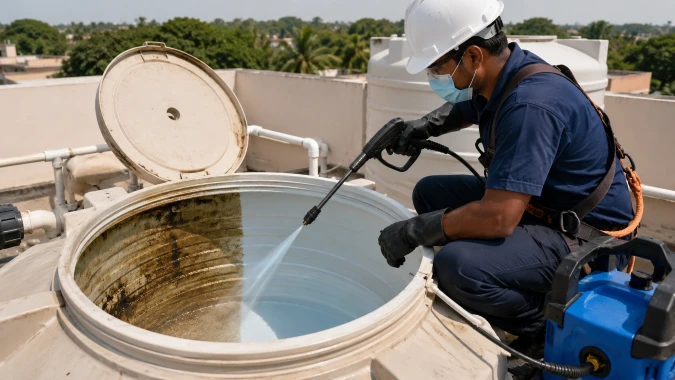
How Professional Water Tank Cleaning Helps Prevent These Problems
Routine maintenance performed by property owners is valuable, but professional cleaning provides a much more thorough solution.
A professional service typically includes:
- Visual inspection of the tank
- Removal of accumulated sediment and sludge
- Cleaning internal surfaces
- Safe disinfection using approved methods
- Final inspection before returning the tank to service
Regular professional water tank cleaning helps minimise the buildup of contaminants that contribute to many of the problems discussed throughout this article.
Simple Tips to Help Prevent Water Tank Problems
Although professional cleaning plays an important role, everyday preventive measures can also help maintain better water quality.
Keep the Tank Properly Sealed
Ensure access covers remain tightly closed to reduce the entry of dust, insects, and debris.
Schedule Regular Cleaning
Routine cleaning removes accumulated sediment before it affects water quality.
Check for Leaks
Inspect visible pipe connections and surrounding areas for signs of water leakage.
Monitor Water Quality
Pay attention to changes in:
- Water colour
- Taste
- Smell
- Water pressure
Early detection often prevents larger maintenance issues.
Arrange Professional Inspections When Needed
If you notice persistent changes in water quality or visible damage, arranging a professional assessment can help identify the cause before it becomes a costly repair.
Frequently Asked Questions
What is the most common water tank problem?
Sediment buildup is one of the most common issues because dust, minerals, and other particles naturally settle at the bottom of the tank over time.
How can I tell if my water tank has a problem?
Common warning signs include:
- Cloudy or discoloured water
- Bad smell or unusual taste
- Visible sediment
- Algae growth
- Low water pressure
- Water leaks
These signs indicate that further inspection or professional cleaning may be required.
Can professional cleaning prevent water tank problems?
Yes. Regular professional cleaning helps remove sediment, algae, biofilm, and other contaminants before they develop into larger maintenance or hygiene concerns.
How often should a water tank be professionally cleaned?
The ideal cleaning schedule depends on the type of property, water usage, tank condition, and local recommendations. Routine inspections help determine when professional cleaning is required.
Why are water tank problems more common in Dubai?
Dubai's climate contributes to faster dust accumulation, higher temperatures, and continuous AC and water usage, all of which can increase the likelihood of sediment buildup, bacterial growth, and other maintenance issues if tanks are not cleaned regularly.
Final Thoughts
Water tank problems rarely appear overnight. In most cases, they develop gradually through sediment buildup, algae growth, corrosion, leaks, or poor maintenance.
Recognising these issues early allows property owners to take corrective action before they affect water quality or lead to expensive repairs.
Regular inspections, preventive maintenance, and professional water tank cleaning work together to help maintain cleaner, safer water for homes, apartments, villas, offices, and commercial properties.
If you've noticed any of the problems discussed in this guide, scheduling a professional cleaning can help restore your tank's condition while reducing the likelihood of future contamination.


